

A homeowner off Highway 20 asked me a specific question during our first visit to her property last September after a tropical weather event had damaged her roof and produced interior water damage. She wanted to know what would actually happen between us and her insurance adjuster during the claim. She’d heard horror stories about contractors fighting with adjusters, claims getting denied, and property owners caught in the middle. The honest answer took about 10 minutes to walk through at her kitchen table before we started any work. The way restoration companies actually work with insurance adjusters follows a specific coordination pattern that produces much better outcomes than adversarial relationships would suggest. Here’s how that coordination actually works, from first notice through claim closure, when it’s done right.
The First Phase: Initial Documentation Before the Adjuster Arrives
The restoration company’s work with insurance adjusters starts before the adjuster has even seen the property. The specific pre-adjuster activities significantly affect how the subsequent coordination proceeds.
The specific first-phase activities:
- Initial property assessment documenting damage scope with photographs from multiple angles
- Moisture mapping using calibrated meters at every affected location with documented readings
- Thermal imaging identifying hidden damage not visible to visual inspection
- Cause determination identifying what produced the damage, which affects coverage considerations
- Scope documentation producing itemized damage records
- Emergency mitigation addressing active water intrusion or immediate safety concerns while documentation proceeds
- Timeline documentation establishing when the event occurred and when response began
- Policy information gathering from the property owner about carrier, policy number, and coverage specifics
For the Highway 20 homeowner, we completed this first phase during our initial visit before her adjuster was scheduled to arrive. The documentation we produced established the baseline conditions, which protected her claim from questions about pre-existing damage versus event damage that often arise when documentation is incomplete.
For property restoration situations where this first-phase documentation isn’t completed, insurance claim outcomes consistently suffer. Adjusters have less to work with, scope questions arise more frequently, and claim processing takes longer. The 60 to 90 minutes required for proper first-phase documentation produces much better subsequent coordination.
The Second Phase: The Adjuster Meeting
The actual meeting between the restoration company representative and the insurance adjuster is where significant coordination happens, and the specific dynamics affect claim outcomes substantially.
The specific adjuster meeting activities:
- Scheduled site visit coordination with both the adjuster and property owner
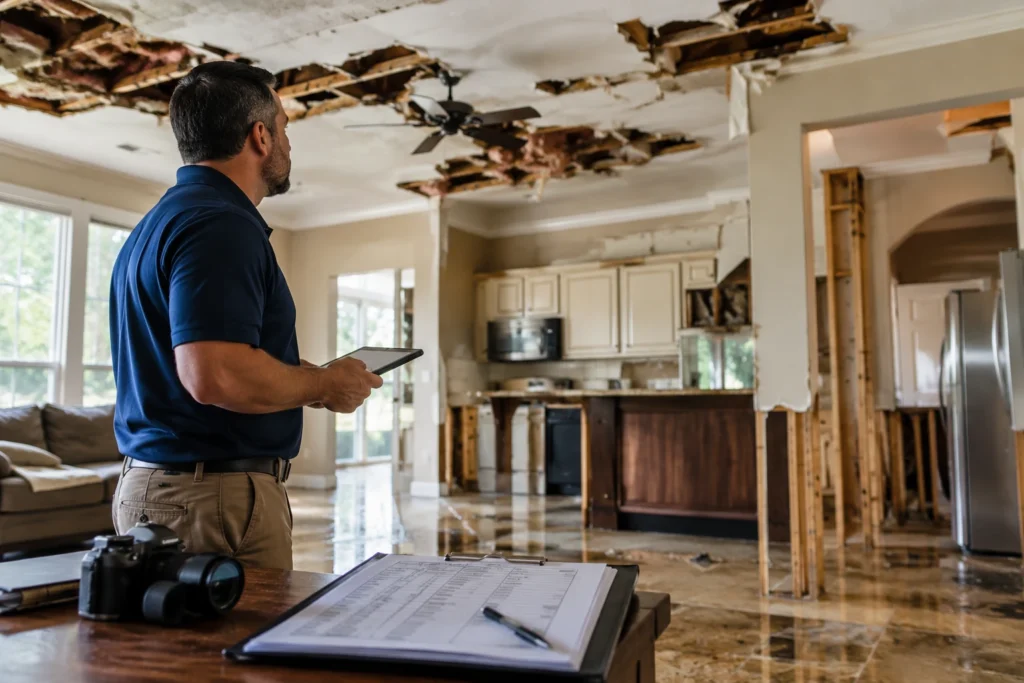
- Property walkthrough with the adjuster showing all documented damage
- Scope presentation including the restoration company’s assessment of required scope
- Moisture reading verification with the adjuster when thermal imaging or meter readings support hidden damage findings
- Scope discussion about any areas where the restoration company and adjuster see things differently
- Industry standard references including IICRC S500 for water damage or similar standards that guide professional scope
- Documentation sharing including photographs, moisture readings, and assessment notes
- Agreement establishment on the agreed scope that will govern the claim
For legitimate restoration-adjuster relationships, the meeting is a professional working session where both parties bring their specific expertise. The restoration company brings direct property knowledge from systematic assessment. The adjuster brings policy coverage expertise and claim processing authority. The goal is reaching accurate agreement on actual scope that reflects both the property conditions and the policy coverage.
For the Highway 20 situation, the adjuster meeting produced agreement on the scope relatively quickly because our pre-meeting documentation had been thorough. The adjuster verified our moisture readings at several locations, agreed with our scope assessment on most items, and had specific questions about two items where we worked through the details together.
The Third Phase: Scope Negotiation and Agreement
Most claims involve at least some scope discussion between what the restoration company documents and what the adjuster initially agrees to cover. The specific negotiation dynamics affect both claim outcomes and property owner interests.
The specific scope negotiation activities:
- Line-item discussion of specific scope items where restoration company and adjuster assessments differ
- Supporting documentation for scope items that require additional justification
- Industry standard citation including IICRC guidelines, manufacturer specifications, and building code requirements
- Supplemental documentation including additional photographs, moisture readings, or expert opinions where needed
- Alternative approach discussion when the adjuster questions specific methodology
- Code upgrade considerations that may be required even if not strictly damage-related
- Hidden damage discoveries that may emerge during work and require supplemental claim coordination
- Written agreement on the final agreed scope that will govern the project
For legitimate restoration-adjuster relationships, this negotiation is professional problem-solving rather than adversarial dispute. Both parties want accurate claim resolution. The restoration company has an interest in scope that produces proper work completion. The adjuster has an interest in scope that reflects actual damage and policy coverage. These interests usually align more than they conflict.
For the Highway 20 situation, our negotiation involved two scope items: whether specific drywall sections required replacement versus drying in place, and whether the ceiling insulation in one area needed replacement. Supporting documentation from our moisture readings and manufacturer specifications on the specific drywall products resolved both items without extended dispute.
For situations where restoration companies and adjusters genuinely disagree about scope, the specific resolution options include supplemental claim processing, independent assessment, or arbitration provisions in the policy. Most situations resolve before reaching these options.
The Fourth Phase: Work Execution and Change Documentation
Once scope agreement is established, work execution proceeds with ongoing documentation that supports both the project itself and any supplemental claim needs.
The specific execution-phase activities:
- Documented work progression with photographs at each project phase
- Hidden damage discovery processes for conditions revealed during work
- Supplemental scope requests when hidden damage requires additional work
- Adjuster communication about discoveries that affect scope significantly
- Change documentation supporting any scope modifications during the project
- Progress reporting keeping the adjuster informed about project status
- Property owner coordination regarding scope changes and project decisions
- Insurance billing coordination matching work completed to agreed scope
For most restoration projects, hidden damage discoveries during execution are common rather than exceptional. The specific protocols for handling these discoveries determine whether they’re addressed smoothly or whether they produce claim complications.
For the Highway 20 project, work execution revealed additional damage behind the drywall in one area that wasn’t visible during the initial assessment. Our supplemental documentation and adjuster communication added that scope to the approved claim without disrupting the project timeline. The specific coordination practice we follow prevents hidden damage discoveries from becoming claim disputes.
For water damage restoration situations specifically, the hidden damage pattern is particularly common because water migration frequently affects materials in ways that aren’t visible without destructive investigation. Experienced restoration companies and adjusters both expect these discoveries and have workflows for addressing them.
The Fifth Phase: Documentation Delivery and Claim Closure
Project completion involves final documentation delivery and claim closure activities that support the property owner’s long-term interests.
The specific closure-phase activities:
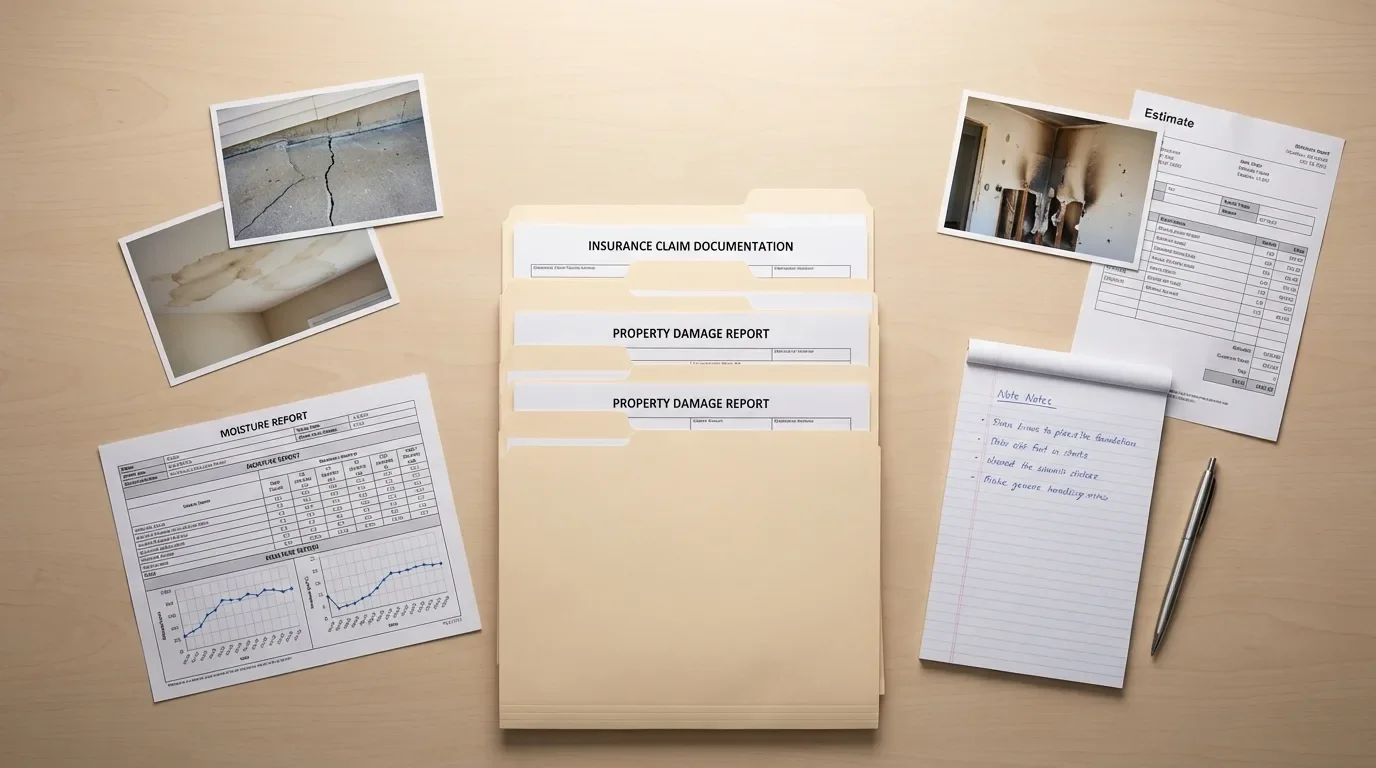
- Completion documentation including before-and-after photographs, scope executed, and materials used
- Final moisture readings confirming completed drying
- Warranty documentation for both materials and workmanship
- Manufacturer registration of applicable warranties
- Final insurance billing matching completed work to agreed scope and any supplemental approvals
- Property owner acknowledgment of completed work
- Claim closure coordination with the adjuster confirming project completion
- Documentation package delivery to the property owner for their records
For the Highway 20 homeowner, her closure documentation package included complete photographic records of every project phase, moisture readings documented through the drying period, warranty paperwork for the materials and workmanship, and final insurance claim records showing the complete scope resolution.
For restoration-adjuster relationships, the closure phase matters significantly for both future claim potential and the professional relationship itself. Properties where closure documentation is thorough and accurate establish patterns that benefit both the property owner and the restoration-adjuster coordination on any future events.
What Business Owners and Homeowners Should Expect From Their Restoration Company
Beyond understanding how the process works, specific restoration company behaviors indicate legitimate professional coordination versus problem patterns.
The specific restoration company practices property owners should expect:
- Direct communication with the property owner throughout the claim process, not just with the adjuster
- Transparent scope discussion including explanations of what’s included and why
- Documentation sharing with the property owner, not just insurance submission
- Educational approach helping the property owner understand what’s happening and why
- Professional adjuster communication without adversarial posturing
- Honest scope assessment reflecting actual property conditions rather than inflated for insurance purposes
- Insurance billing transparency showing what was billed and what was collected
- Advocacy for legitimate scope without extending into fabrication or exaggeration
- Clear boundaries around what the restoration company controls versus what the insurance process controls
For property owners facing significant insurance claims, the restoration company essentially becomes their primary professional advocate during the claim process. The specific company behaviors that produce good advocacy differ from behaviors that create problems. Transparency, honest assessment, and professional adjuster relationships produce much better outcomes than aggressive or adversarial approaches.
For Freeport property owners specifically, the Florida insurance environment makes these dimensions particularly relevant. Restoration companies with substantial experience in the Panhandle insurance market understand what works and what doesn’t. Companies without this specific regional experience sometimes approach situations in ways that produce worse outcomes.
What the Restoration-Adjuster Workflow Reduces To
How restoration companies work with insurance adjusters follows a specific five-phase workflow when done well: thorough first-phase documentation before the adjuster arrives, professional adjuster meetings based on that documentation, scope negotiation grounded in evidence and industry standards, work execution with ongoing coordination for hidden damage discoveries, and complete closure documentation supporting the property owner’s long-term interests. The Highway 20 homeowner’s claim resolved smoothly because this specific workflow operated as designed. Her adjuster, our restoration team, and her interests all aligned around accurate claim resolution rather than any adversarial dynamic. For every Freeport property owner facing significant insurance claims, understanding that the restoration-adjuster coordination follows this specific pattern helps evaluate whether their situation is proceeding as it should, and helps recognize problem patterns early if the workflow isn’t operating properly.
Get Professional Restoration-Adjuster Coordination at Your Freeport Property
The team at Truvorne Roofing & Restoration is ready to help. Contact us today for professional restoration services at your Freeport, FL property with the systematic documentation, professional adjuster coordination, and transparent claim support that produces claim outcomes reflecting actual property conditions and legitimate policy coverage.